

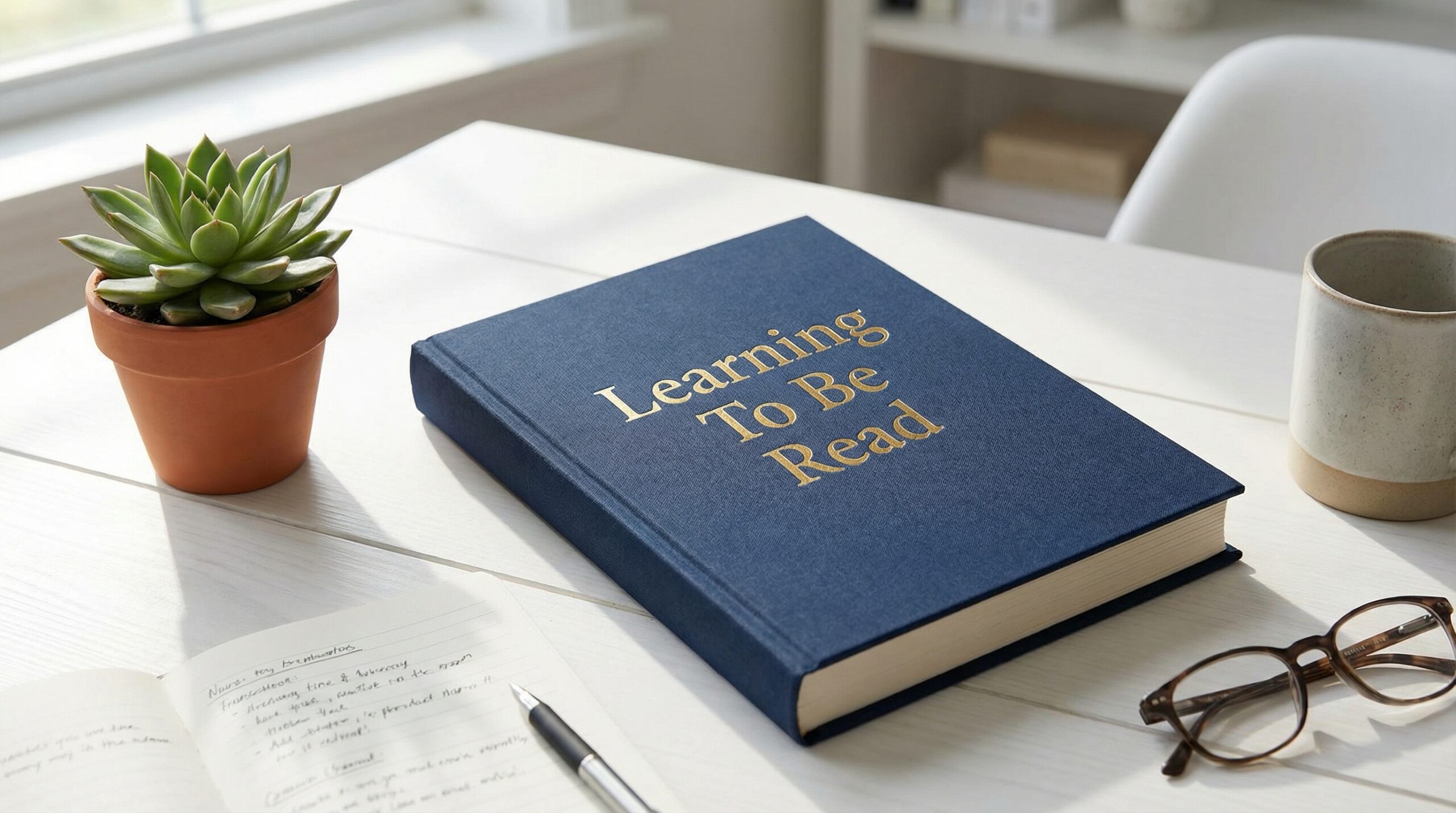
I know how to write. At least, I like to think I do. What I’m still learning, slowly and awkwardly, is how to be read.
That distinction took me a long time to fully understand. Writing, for me, has always been about story. Not just sentences or style, but the deeper mechanics of narrative: character, momentum, consequence. It’s what I studied. It’s what I pay attention to when I read a book or watch a movie. It’s the lens I’ve been looking through for most of my life. In that sense, my confidence feels factual, even if it still feels provisional in public. I’ve had short stories published. I’ve written screenplays. I’ve published a novel. Those things count for something, at least to me.
What they don’t guarantee is readership.
I learned that lesson almost immediately after publishing my short story Pick Up the Pieces. I put it out into the world, did what I thought was “enough,” and then… nothing happened. No surge of readers. No discovery moment. Just silence. It was a real eye-opener. Hard work isn’t enough. Quality isn’t enough. You also have to change hats and become a marketer, and that instinct does not come naturally to many writers—myself included.
That’s where the rookie feeling sneaks in. Not because I don’t know how to write, but because publishing has its own physics, and I’m still learning how gravity works here. Screenwriting trained me to hand the work off and move on. Prose doesn’t let you do that. Once the book is out, it’s still yours to carry—to talk about, to advocate for, to keep alive—and most of the time, you’re the only one actively doing so. And sometimes you do all of that and it still lands like a WKRP turkey (you youngsters can google that one). That’s part of the deal, but it doesn’t make it painless.
What surprised me most was how chaotic discovery actually is. I had imagined it would be more streamlined, more logical. Instead, it feels like a bookstore where all the spines face inward and the shelves rotate constantly. That’s the window. That’s the moment you have to convince someone your story is worth their time. Worth their attention. Worth their trust.
Writing itself has changed too. I used to draft without thinking much about what came after. Now I can’t unsee the finished product while I’m working—the cover, the preview window, the back-cover copy. That’s new to me. With screenwriting, you don’t control any of that. With fiction, you control almost all of it, and that control comes with trade-offs. When I finished the first draft of Project Sunset and went back for a full reread, I caught myself thinking less about whether the story worked and more about how someone online would encounter it. If they clicked into the preview, was what I gave them enough? I rewrote the opening scene with that question in mind. Not because it was broken, but because I knew it had to hook immediately. I must have gone over the first line fifty times, trying to find the version that would make a stranger pause, maybe chuckle, and hopefully trust the voice enough to keep going. I think about blurbs now while I’m still drafting. I hear the logline forming before the final act is even done. That awareness makes me sharper. It also makes me second-guess things I once would have left alone.
Every part of this business involves compromise, but the ones that sting aren’t the usual craft decisions. They’re about voice and visibility. How much of yourself do you put into the public version of you? How much do you sand down your natural tone so it fits expectations? Writing used to be private. Being read requires exposure. And exposure changes things. How experimental can you afford to be without risking a loss of readers? Unless you truly don’t care about being read, every decision nudges you closer to or farther from an audience. I’m still negotiating those compromises in real time, trying to stay honest without being naïve.
What I don’t want is for this to sound like advice. This is just my experience. Exciting and frustrating, sometimes simultaneously. If there’s anything I hope another writer takes from it, it’s permission to listen inward. There’s so much advice out there—much of it contradictory, much of it awful—that it’s easy to lose your footing. The only reliable compass I’ve found points back to the work itself. To what feels true. To what only you can make.
As for learning how to be read, I’m still figuring that out. I do what I can to put the work in front of people who might enjoy it, and then I let go. I try to worry only in direct proportion to what I can control. Some days I succeed. Some days I don’t.
What stays constant is gratitude. The simple fact that I get to do this at all—to tell stories that mean something to me and send them out into the world—is not something I take lightly. I don’t feel entitled to readers. I don’t feel owed anything. The work is the work. The rest is hope.
That feels like the best place to stand for now. I just wanted to let you all know that things are moving forward on Project Sunset. This is the grind, where the stone finds its final shape and gets ready for polishing.
Thanks for reading.